Cookieless tracking in 2026 means analytics that doesn't set or read any persistent client-side identifier — not third-party cookies, not first-party cookies, not localStorage, not a fingerprint. The European Data Protection Board's Guidelines 2/2023 on Article 5(3) of the ePrivacy Directive made the legal piece explicit: localStorage and fingerprinting need consent on the same footing as cookies, see the EDPB guidelines text. So "cookieless" is shorthand for "no client-side identifier at all," not just "no third-party cookie." That's a much narrower category than most vendor marketing pages claim.
Quick Facts
| Spec | Value |
|---|---|
| What "cookieless" means in 2026 | No persistent client-side identifier (cookie, localStorage, fingerprint) |
| Architectures in the market | A1 server-side first-party hash, A2 first-party 1.x-day cookie, A3 fingerprintless rotating hash |
| Safari + Firefox share | ~28-32% global (StatCounter, late 2025) |
| Safari 3rd-party cookie block | March 2020 (ITP 2.3 + full 3P block) |
| Firefox Total Cookie Protection | June 14, 2022 (default for all users) |
| Chrome 3P cookie deprecation | Paused July 2024; user-choice via Privacy Sandbox |
| EU consent scope (EDPB 2/2023) | Cookies + localStorage + fingerprinting all need opt-in |
| CNIL audience-measurement exemption | Rotating salt + truncated IP + no cross-site + no ads |
| Attrifast script size | ~4KB (random first-party anonymous ID in localStorage) |
| Plausible script size | ~1KB gzipped (per their docs) |
I built Attrifast after watching ITP 2.3 quietly evaporate 30%+ of my paid-search attribution overnight, then spending two years stitching first-party hashes into roughly 40 marketing channels on my own properties. The pattern that keeps showing up: founders pick a "cookieless" tool, ship it, and only later realize the vendor's architecture either leaks a fingerprint into a CMP consent zone, or quietly stores a localStorage ID, or models the gap with a Google service that needs Consent Mode v2 anyway. The category isn't a single thing. There are three architectures, they trade off differently, and most teams pick the wrong one for their traffic mix.
What "Cookieless Tracking" Actually Means in 2026

Working definition first. A cookieless tracking solution is one that:
- Sets no third-party cookie. Obvious; this is the marketing pitch.
- Sets no first-party persistent cookie used for analytics identity.
- Writes no persistent value to localStorage, sessionStorage, IndexedDB, or any storage API that survives a tab close.
- Computes no stable client-side fingerprint that survives across sessions.
That's the narrow definition. Most vendors meet bullets 1 and 2, fewer meet 3, and fewer still meet 4. The EDPB's Guidelines 2/2023 on the technical scope of Article 5(3) ePrivacy is explicit: localStorage and fingerprinting fall under the same consent regime as cookies. The implication is unforgiving — if your "cookieless" tool stores even a session-id in localStorage, you legally still need EU consent for it.
"No cookie" does not equal "no consent." That's the part most product pages quietly skip.
The flowchart above is the legal decision in one picture. Anything that persists across sessions or links across sites trips Article 5(3) consent. Only request-scoped, non-linking analytics gets the CNIL exemption.
For the underlying cookie-death mechanism (ITP timeline, Total Cookie Protection, link decoration, bounce tracking), the long-form is in cross-site tracking explained — I'm not going to rebuild it here. The short version: Safari's ITP 2.3 (2020) caps JS-set first-party cookies at 7 days, Firefox's Total Cookie Protection (June 14, 2022) partitions every cookie by top-level site, and Chrome's July 2024 pause flipped 3P-cookie deprecation into a user-choice flow via Privacy Sandbox. The browsers settled the cookie question. The regulators tightened the storage question. Cookieless tracking is the design pattern that answers both.
The 3 Architectures: A1, A2, A3 Side-by-Side
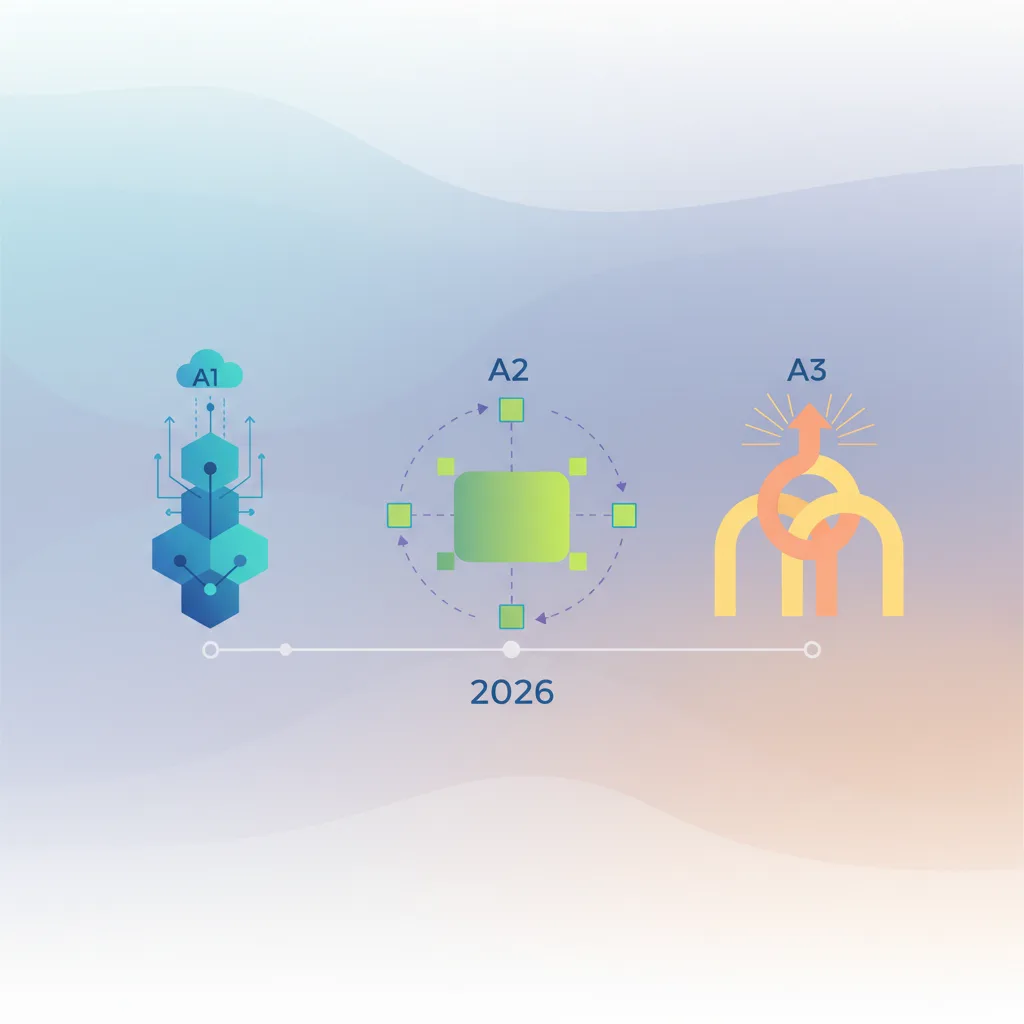
Three architectures show up in real implementations. Most vendors mix two of them and pick the marketing label that ranks best.
| Architecture | How it identifies a session | Client-side state | Server-side state | Banner-free in CNIL exemption? |
|---|---|---|---|---|
| A1: Server-side first-party hash | Hash of IP + user-agent on the server, salted with a daily-rotating value | None | Hash + counter; salt rotates every 24h | Yes, if salt rotates and IP is truncated |
| A2: First-party 1.x-day cookie | A short-lived first-party cookie scoped to your domain, expires in 1-7 days | One cookie | Visit counter | Conditionally; depends on cookie purpose |
| A3: Fingerprintless rotating hash | Hash of request headers (IP, UA, language) computed on each request, rotated on a schedule | None | Rotating hash window | Yes, if hash window is short enough |
A1 (server-side first-party hash) is what Plausible's data policy describes and what Fathom calls their privacy architecture — the salt rotation is what makes the hash non-reversible across days. A2 (1.x-day cookie) is what Matomo's cookieless mode ships when admins disable cookies; PostHog has a similar fallback documented in their privacy docs. A3 (fingerprintless rotating hash) is what Umami's visitor.ts implements — see the Umami source on GitHub for the rotating-hash function.
The trade-offs are real:
- A1 wins on accuracy because the hash is computed where you can verify it. It loses on cross-device because there's nothing to stitch.
- A2 wins on developer simplicity because everyone already knows cookies. It loses on the GDPR conversation because a cookie is a cookie, even a first-party one.
- A3 wins on banner-freeness because the hash window can be tuned tight enough to satisfy the CNIL exemption. It loses on session continuity — if a user's IP changes mid-session, you lose the join.
This is the A1 server-side first-party hash in one diagram. The visitor browser never receives or stores an identifier. The hash lives on the server, the salt rotates every 24 hours, and the analytics store keeps the day's hashes long enough to count uniques, then forgets the linkage when the salt rolls.
Decision tree: which architecture should you ship?
Answer each question yes/no in order. The first "no" tells you where to land.
Q1. Is your EU traffic over 20% of total?
    ├─ No  → GA4 + Consent Mode v2 is probably enough. Stop.
    └─ Yes → continue to Q2

Q2. Is your Safari + Firefox combined share over 25%?
    ├─ No  → A2 (first-party 1.x-day cookie) is acceptable. You'll still need a banner.
    └─ Yes → continue to Q3

Q3. Do you need to join sessions to Stripe revenue (not just clicks)?
    ├─ No  → A3 (fingerprintless rotating hash) — banner-free under CNIL exemption.
    └─ Yes → continue to Q4

Q4. Can you tolerate same-device-only attribution (no cross-device stitch)?
    ├─ Yes → A1 (server-side first-party hash) — or a scoped first-party ID (Attrifast's localStorage approach).
    └─ No  → You need a logged-in identity (email/userId), not a cookieless tool.
This is the single chart I wish I'd had when I was picking my own architecture two years ago. The default failure mode is starting with A2 because it's easiest, then discovering at month 6 that the CMP consent rate on EU traffic killed half your data and you needed A1 or A3 the whole time.
Do You Actually Need Cookieless? GA4 + Consent Mode v2 vs Cookieless Decision Rules

Most teams asking "do I need cookieless?" don't actually need to abandon Google. They need to know when Consent Mode v2 is enough and when it isn't. Four decision rules, in priority order:
Rule 1: EU traffic share. If EU + UK traffic is under roughly 15-20% of your total, Consent Mode v2 plus a competent banner is usually fine. The modeled-conversion gap matters less when the modeled bucket is small. Above 30%, Consent Mode v2 starts leaving visible holes — industry-reported variability runs wide, often well below full parity on EU-heavy traffic per multiple practitioner reports. (Note the hedge — I can't directly cite a single authoritative under-75% accuracy benchmark, so I won't claim a hard number; what I will say is that practitioner reports consistently describe material drops, and on my own EU-heavy site the modeled bucket was unreliable enough to act on.)
Rule 2: Safari + Firefox combined share. StatCounter's late-2025 browser market share data puts Safari plus Firefox at roughly 28-32% globally. Even with Consent Mode v2, both browsers' default cookie-blocking eats into accuracy for paid attribution windows longer than the ITP 7-day cap. If your audience skews Mac/iPhone or developer/privacy-aware, that share can climb to 45-55%, and Consent Mode v2 has no useful answer for it.
Rule 3: Attribution window. Consent Mode v2 handles a 7-day window well. At 14 days it starts modeling more than it observes; at 28-30 days (a SaaS trial-to-paid cycle) it's modeling most of the conversion. If your sales cycle is over two weeks, you want first-party storage that survives the gap.
Rule 4: Revenue join need. If your KPI is sessions, GA4 + Consent Mode v2 is fine. If your KPI is RPV (revenue per visitor) and you need to join Stripe checkout.session.completed events back to the original channel, you need cookieless-architecture analytics with a server-side revenue join. GA4 with Enhanced Measurement can approximate it, but you'll be reconciling spreadsheets every month — I did this for two years before building Attrifast specifically to stop doing it.
Run the four rules. Two or more yeses and you're in cookieless territory. The Austrian DPA's January 2022 ruling (and the parallel French CNIL decisions on Google Analytics) said standard GA4 implementations violate GDPR because data flows to US servers. Consent Mode v2 was Google's response. It doesn't fix the architectural issue; it papers over it via modeled aggregates.
When Each Architecture Wins (And Where It Breaks)
Per-architecture wins and break conditions. These are the failure modes I've personally hit or watched clients hit.
| Architecture | Wins when | Breaks when |
|---|---|---|
| A1: Server-side first-party hash | EU-heavy traffic, need revenue joins, OK with same-device | User is on a mobile carrier with rotating CGNAT IPs — hash flips mid-session |
| A2: First-party 1.x-day cookie | Mostly US traffic, want easiest install, fine with banner | Safari/Firefox traffic spikes; ITP caps the cookie at 7 days and the math doesn't work past that |
| A3: Fingerprintless rotating hash | Want CNIL exemption, want banner-free, OK with shorter attribution windows | You need to attribute a conversion that happened 14 days after the click — hash window rotated, identity lost |
A1's failure mode is the one that bit me hardest. Mobile carrier CGNAT (carrier-grade NAT) gives many users a shared IP that rotates every few minutes. The server-side hash flips, the session looks new, and you under-count returning visitors. The fix isn't subtle — you accept that mobile-heavy audiences will see modest under-counting on returning sessions, and you compensate by tracking the conversion event itself with full fidelity (which is what Attrifast does via the Stripe webhook join, not via the client hash).
A2's failure mode is more obvious. Safari's ITP 2.3 caps JS-set first-party cookies at 7 days. Firefox's Total Cookie Protection partitions by top-level site, which is fine for first-party but still resets per-site if a user visits via a different referrer chain. If your attribution window is 14 days and your audience is 35% Safari, you're losing about a third of returning-visitor signal regardless of how clever your cookie is.
A3's failure mode is the rotating window itself. Fathom and Umami both rotate the hash window on a schedule — daily for most defaults. That's deliberate: a hash that never rotates is just a fingerprint, and the EDPB called fingerprinting out by name. The trade-off is that a returning visitor on day 2 looks new. Fine for traffic counting. Less fine for "track a paid click to a Stripe payment 9 days later."
Honest hedge: I shipped a scoped first-party identifier in Attrifast — a random anonymous ID in localStorage, meaningless outside your own site — because most bootstrapped SaaS founders care more about same-device revenue attribution than cross-device sessions. Some clients need cross-device — when they do, I tell them to capture an authenticated user ID at login and stop pretending an anonymous analytics tool can solve it. There is no anonymous-and-cross-device option that doesn't quietly cross a privacy line.
Vendor Cheat Sheet: Which Architecture Each Tool Actually Ships
Most "cookieless" vendor marketing pages over-promise. The privacy policies are where the architecture leaks. Here's what each shipping tool actually does, with citations to the public privacy policy or data policy rather than the marketing page. (For the same tools ranked on conversion measurement rather than architecture, see the best conversion tracking software comparison.)
| Tool | Architecture | Cookies | localStorage | Banner-free? | Source |
|---|---|---|---|---|---|
| Plausible | A1 server-side first-party hash | No | No | Yes (CNIL exemption) | plausible.io/data-policy |
| Fathom | A1 server-side first-party hash | No | No | Yes (CNIL exemption) | usefathom.com/data |
| Matomo (cookieless mode) | A2 fallback / A1 with config | Optional | No | Yes with config | matomo.org/blog/2023/02/ |
| PostHog | A2 by default; cookieless opt-in (A1-style) | Yes by default | Yes | No by default | posthog.com/docs/privacy/cookieless-tracking |
| Umami | A3 fingerprintless rotating hash | No | No | Yes, with short window | github.com/umami-software/umami |
| Pirsch | A1 server-side first-party hash | No | No | Yes | Pirsch privacy docs |
| GA4 + Consent Mode v2 | Cookies + modeled conversions on refusal | Yes | Yes | No | developers.google.com/tag-platform/security/concepts/consent-mode |
| Attrifast | First-party anonymous ID (localStorage) + Stripe webhook join | No | Yes (random anonymous ID) | No claim — no cross-site tracking | /features/cookieless-revenue-analytics |
A few notes worth flagging:
PostHog ships an A2 default because they're a product-analytics suite (replays, flags, experiments) where cross-session identity is a feature, not a leak. They documented a true cookieless mode in late 2023; it's opt-in and disables a chunk of the suite. That's the right architectural call — don't pretend you can do session replay without an identifier.
Plausible's data policy is the cleanest public write-up of A1. Their session cache implementation rotates the salt daily and never persists raw IPs; the code itself is on GitHub if you want to read it. Their script is roughly 1KB gzipped (smaller than most cookieless competitors).
GA4 with Consent Mode v2 isn't cookieless — Google's own docs describe the cookies it sets on accept and the modeled aggregates it uses on refuse. Treating it as a cookieless solution is a misread. It's a consent-flow compatibility layer.
Attrifast pairs a scoped first-party identifier with a Stripe webhook join layered on top. The ~4KB script stores a random anonymous ID in localStorage that never leaves your site — no fingerprinting, no cross-site tracking — and the Stripe checkout.session.completed webhook joins the session to the payment. That's the architecture I built after the two-year GA4 + Stripe spreadsheet stitch — see Stripe-native revenue attribution for the integration walkthrough.
For a tool-by-tool feature comparison (event support, dashboard quality, pricing, SDK coverage), see privacy-first analytics tools 2026. I'm not going to rebuild the 8-tool comparison here — this article's job is the architecture taxonomy.
How to Move to a Cookieless Architecture This Quarter (Operator Playbook)
Five steps. Total operator time: maybe 6-8 hours over a quarter, most of it waiting for data to accumulate. The hardest step is the audit; the rest is wiring.
Step 1: Audit your current attribution gap (60-90 minutes). Pull your GA4 dashboard. Pull your Stripe payouts dashboard for the same window. Compare paid-channel revenue by source. The gap between them — the revenue Stripe sees but GA4 has classified as (direct) / (none) — is your cookieless dividend. On my own properties that gap ran 28-35% on EU-heavy traffic; on US-only traffic with short consideration windows it was 5-8%. Yours will land somewhere in between.
Step 2: Pick an architecture (30 minutes). Run the decision tree above. EU heavy + revenue joins → A1. CNIL banner-free obsession → A3. Mostly US, short cycle → A2 (or stay on Consent Mode v2). Don't pick by vendor — pick by architecture, then find a vendor that ships it. The cookieless attribution solution comparison in our features page walks through the A1 case in detail.
Step 3: Deploy in parallel (15-30 minutes). Don't switch off your existing analytics yet. Install the cookieless tool alongside it on a few high-traffic pages. Two weeks of parallel data is enough to compare counts. If the cookieless tool reports 90-105% of the existing tool's session count, you're fine. If it reports under 70%, something's broken (usually a script load order issue, or the CMP is blocking the new script too).
Step 4: Backfill Stripe revenue joins (1-2 hours). This is the actual revenue-attribution piece. Subscribe to checkout.session.completed. Pass your tracking session ID through the Stripe Checkout Session metadata. On the webhook, look up the session, attach the original UTM source, write to your analytics store. This is what turns visit data into channel revenue without any browser cookie at the moment of attribution. For more detail on the server-side mechanics, see conversion tracking without cookies — I built the full session-hash deep dive there and won't rebuild it here.
Step 5: Kill the consent banner if you can (15 minutes if eligible). Re-read the CNIL audience-measurement exemption conditions: rotating salt, truncated IP (drop the last octet), no cross-site linkage, no advertising use. If your architecture meets all four — A1 and A3 typically do — you can drop the banner for analytics-only purposes in France and several other EU jurisdictions. For the broader GDPR Article 6 lawful-basis story (where you still need consent if your processing exceeds the exemption), see GDPR analytics compliance.
That's the whole playbook. The thing that surprised me most when I ran it on my own properties: the parallel-deploy step (Step 3) was where I caught the biggest issues — script load order, CMP false positives, ad-blocker false negatives. Skip it at your peril.
Limitations
- This article does not cover mobile app attribution. SKAdNetwork, AppsFlyer, Adjust, and the iOS/Android privacy frameworks are a separate post; the cookieless web architectures here don't apply directly to native apps.
- Cross-device attribution without an authenticated user ID is out of scope. If you need to stitch a desktop session to a phone session for the same anonymous human, no cookieless architecture will do it cleanly — you need a login.
- Privacy Sandbox APIs (Topics, Attribution Reporting, FedCM) are shipping but niche outside large advertisers in 2026. They're not in the three-architecture taxonomy because most bootstrapped SaaS teams haven't deployed them yet.
- Server-side ad platform APIs (Google Enhanced Conversions, Meta Conversions API) are a different privacy posture — they ship hashed first-party data to the ad platform, which re-identifies internally. That's not cookieless in the strict sense; it's first-party-data-shared.
- Enterprise B2B with multi-month sales cycles needs CRM-side attribution layered on top. Cookieless web tracking gives you the first touch; the deal record gives you the close. Both are required.
FAQ
What does "cookieless tracking" actually mean in 2026?
It means analytics that does not set or read any browser cookie — first-party or third-party — to identify a session. The EDPB's Guidelines 2/2023 on Article 5(3) of the ePrivacy Directive made clear that local storage, fingerprinting, and any client-side identifier need consent on the same footing as cookies. So "cookieless" in 2026 is shorthand for "no client-side persistent identifier at all," not just "no third-party cookie." Several vendors stretch the label, which is why architecture matters more than the marketing word.
Is Google Consent Mode v2 a cookieless solution?
Not really. Consent Mode v2 still relies on Google's cookies when the user accepts, and on modeled conversions when they refuse. Modeling uses machine learning on aggregate signals to fill the gap, but coverage varies and industry-reported accuracy runs wide — often well under full parity on EU-heavy traffic per multiple practitioner reports. It's a compatibility layer that keeps Google Ads working through the consent banner, not a replacement for cookies. If your traffic is mostly Safari and Firefox or your EU consent refusal rate is high, Consent Mode v2 leaves big gaps that a true cookieless architecture closes.
What are the three cookieless tracking architectures?
A1 is server-side first-party hashing: the visitor's IP and user agent get hashed with a daily-rotating salt on the server, no client-side identifier persists. A2 is first-party-cookie analytics where a short-lived cookie scoped to your own domain stores a session ID — technically a cookie, so "cookie-light" rather than fully cookieless. A3 is fingerprintless rotating hashing in the client: the script computes a hash from request headers and rotates it on a schedule so no cross-session identity persists. Most public privacy policies show vendors mix-and-match, especially A1 and A3.
When is Consent Mode v2 enough vs full cookieless?
Use Consent Mode v2 if your EU traffic share is small (under roughly 15-20%), your Safari plus Firefox share is below 25%, your attribution window is short (under 7 days), and you don't need to join sessions to Stripe revenue. Switch to a cookieless architecture when any of those four conditions break — most often when EU traffic is over 30%, Safari plus Firefox crosses 28-32% (StatCounter late-2025 levels), or you need first-party revenue joins. The decision tree in this article walks through the four checks.
Can a cookieless analytics tool still drop the consent banner under GDPR?
Sometimes. The CNIL publishes an audience-measurement exemption: rotating salt, truncated IP (typically dropping the last octet), no cross-site linkage, and no use for advertising. Tools that meet all four conditions can operate without a consent banner in France and several other EU jurisdictions. Vendors documenting this stance in their public data policy include Plausible and Fathom. Most US-style "cookieless" tools still need a banner if they retain a persistent identifier or use the data for ads.
Related reading from the Attrifast research stack
For hands-on tools, see privacy-first analytics and revenue attribution.
References
- Intelligent Tracking Prevention 2.3, WebKit. https://webkit.org/blog/9521/intelligent-tracking-prevention-2-3/
- Tracking Prevention in WebKit, WebKit. https://webkit.org/tracking-prevention/
- Firefox Rolls Out Total Cookie Protection By Default To All Users Worldwide, Mozilla. https://blog.mozilla.org/security/2022/06/14/firefox-rolls-out-total-cookie-protection-by-default-to-all-users-worldwide/
- Consent Mode v2 concepts, Google Tag Platform. https://developers.google.com/tag-platform/security/concepts/consent-mode
- Privacy Sandbox, Google. https://privacysandbox.google.com/
- Guidelines 2/2023 on Technical Scope of Art. 5(3) of ePrivacy Directive, EDPB. https://www.edpb.europa.eu/our-work-tools/documents/public-consultations/2023/guidelines-22023-technical-scope-art-53-eprivacy_en
- Cookies and other trackers, guidelines, CNIL. https://www.cnil.fr/en/sheet-ndeg16-use-analytics-your-websites-and-applications
- Plausible Data Policy, Plausible Analytics. https://plausible.io/data-policy
- Fathom Data and Privacy, Fathom Analytics. https://usefathom.com/data
- Matomo cookieless mode, Matomo. https://matomo.org/blog/2023/02/
- PostHog cookieless tracking, PostHog Docs. https://posthog.com/docs/privacy/cookieless-tracking
- Umami visitor identification, Umami Software (GitHub). https://github.com/umami-software/umami
- Browser Market Share Worldwide, StatCounter. https://gs.statcounter.com/browser-market-share
- Stripe Checkout Sessions API, Stripe Docs. https://docs.stripe.com/api/checkout/sessions
- SaaS Marketing Attribution, ChartMogul Blog. https://chartmogul.com/blog/saas-marketing-attribution