I maintain the code in Attrifast's tracking script that reads UTM parameters off a landing page, and the free UTM builder and UTM checker on this site. Most broken attribution I see starts with a tag that looked fine and was not: a capital letter, a missing medium, a redirect that dropped the query string.
So this guide covers the definition, then the parts that decide whether your numbers are right. For the data, we used DataForSEO to pull US search volumes, read the ten pages Google ranks for "what are utm parameters", and sent 80 prompts to ChatGPT to see how it tags the links it cites.
What are UTM parameters?
UTM parameters are short tags added to the end of a URL that tell your analytics tool where a visitor came from. Each tag is a name and a value, such as utm_source=newsletter. When someone clicks the link, your analytics reads the tags from the address bar and records the visit under that source, medium and campaign instead of guessing.
A tagged link looks like this:
https://example.com/pricing?utm_source=newsletter&utm_medium=email&utm_campaign=october-launch
Everything after the ? is the query string. The & separates one parameter from the next. The page is the same page; only the label changes.
UTM stands for Urchin Tracking Module. Urchin Software was a web analytics company that Google agreed to buy in March 2005[7]. Its product became Google Analytics, which is why the parameter names Urchin introduced are supported out of the box by Google Analytics and read by almost every other analytics tool today[6].
Why UTMs still matter in 2026
You might expect a fifteen-year-old convention to be fading. Search data says the opposite. US searches for the question "what are utm parameters" have grown 3.7 times since 2019, while searches for the bare term "utm parameters" are below their 2019 level and 39% under their 2022 peak.
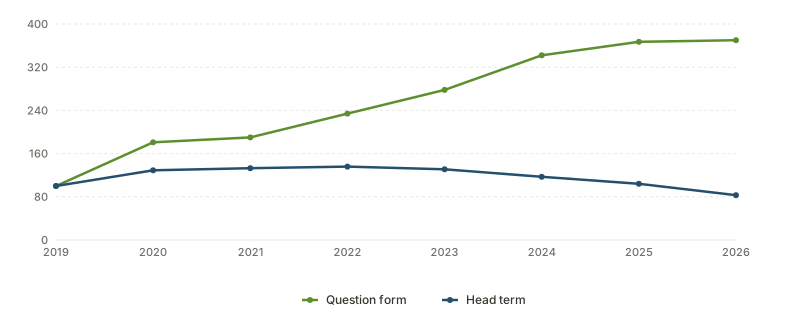
Source: DataForSEO Labs, Google Ads monthly search volume, United States, English. Yearly averages; 2026 = January to August. Pulled 4 October 2026.
More people are asking what UTMs are, and the reason is practical. Referrer data is getting thinner. Apps, privacy settings and redirects strip the referrer from many clicks, and a click with no referrer and no tags lands in Direct. A UTM travels inside the URL itself, so it survives where the referrer does not. That is also why ChatGPT tags its own links, as the study below shows.
The five UTM parameters, and what each one means
| Parameter | The question it answers | Example values | When to use it |
|---|---|---|---|
utm_source | Who sent the click? | google, newsletter, facebook, partner-blog | Always |
utm_medium | What kind of channel was it? | email, cpc, paid_social, social, affiliate, referral | Always |
utm_campaign | Which campaign or promotion? | october-launch, black-friday-2026 | Always |
utm_term | Which paid keyword? | utm+builder | Paid search only |
utm_content | Which link, button or creative? | header-cta, video-ad-b | When one message has several links |
Google's own guidance is to always use utm_source, utm_medium and utm_campaign whenever you tag a link, and it warns that missing parameters show up as "(not set)" in reports[1]. GA4 also accepts four more parameters on top of the classic five[1]:
| GA4 parameter | What it is for |
|---|---|
utm_id | A campaign ID, used to join your links to cost data you import |
utm_source_platform | The platform that directed the traffic, such as Search Ads 360 or Display & Video 360 |
utm_creative_format | The type of creative, such as display, native or video. Not currently shown in GA4 reports |
utm_marketing_tactic | The targeting used, such as remarketing or prospecting. Not currently shown in GA4 reports |
Most teams never need the extra four. Use utm_id if you import campaign or cost data into GA4, and ignore the rest until a report asks for them. They are also not universal. Attrifast's tracker, for example, reads the classic five and nothing else, and many other tools do the same.
UTM source vs medium: the distinction that breaks most reports
Source is who sent the visitor. Medium is how. The confusion comes from channels where both feel like the same thing, so here is how the pair works for common cases:
| Where the link lives | utm_source | utm_medium |
|---|---|---|
| Your email newsletter | newsletter | email |
| A paid Facebook or Instagram ad | facebook or instagram | paid_social |
| An organic LinkedIn post | linkedin | social |
| A Google Ads text ad, if you tag manually | google | cpc |
| A guest post or partner site | partner-name | referral |
| An affiliate link | affiliate-name | affiliate |
| A podcast or QR code on print | podcast-name or flyer | audio or print |
The medium matters more than people expect, because it decides which channel the visit lands in.
How GA4 turns your utm_medium into a channel
GA4 sorts every session into a default channel group, such as Email, Organic Social or Paid Search, by matching the source and medium against fixed rules[2]. The rules are public, and they are stricter than most guides suggest:
| GA4 channel | What GA4 needs to see |
|---|---|
Source or medium is email, e-mail, e_mail or e mail | |
| Affiliates | Medium is affiliate |
| Referral | Medium is referral, app or link |
| Organic Social | Source is on Google's list of social sites, or medium is social, social-network, social-media, sm, social network or social media |
| Paid Social | Source is a social site and medium matches a paid pattern: anything containing cp, ppc, retargeting, or starting with paid |
| Display | Medium is display, banner, expandable, interstitial or cpm |
| AI Assistant | Medium is ai-assistant. GA4 sets that medium itself when the referrer is on its list of AI assistants, such as ChatGPT, Gemini, DeepSeek, Copilot or Grok. AI Overviews and AI Mode are excluded |
| Unassigned | Nothing above matched |
Two things follow from that table. First, utm_medium=newsletter does not count as Email. Only the four spellings of "email" do, so a newsletter tagged that way falls into Unassigned. Second, utm_medium=paid-social with a hyphen matches the paid pattern because it starts with "paid", but utm_medium=facebook-ads does not, and lands somewhere you did not intend.
GA4 added the AI Assistant channel in May 2026[3]. Notice what the rule keys on: the referrer, not your UTM. That detail matters for ChatGPT traffic, as the next sections show.
UTM parameter examples you can copy
Most of the demand around UTMs is people looking for a builder. "utm builder" alone draws 12,100 US searches a month, more than four times the 2,900 for "utm parameters".
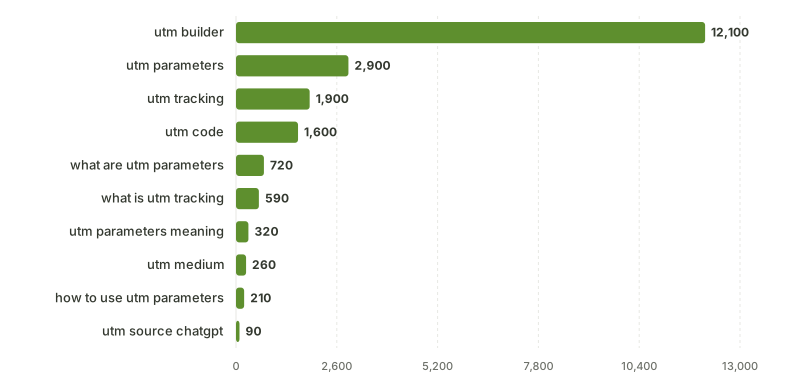
Source: DataForSEO Labs keyword data, United States, English, average monthly Google searches over the 12 months to August 2026. Pulled 4 October 2026.
If you would rather not type them by hand, the UTM builder lowercases and hyphenates values for you. Here are tagged links for the cases that come up most:
Email newsletter
https://example.com/pricing?utm_source=newsletter&utm_medium=email&utm_campaign=october-launch&utm_content=header-button
Paid social, using Meta's dynamic parameters — set these in the URL parameters field of the ad, and Meta fills in the campaign and ad names when the ad is served[10]:
utm_source=facebook&utm_medium=paid_social&utm_campaign={{campaign.name}}&utm_content={{ad.name}}
Google Ads — leave auto-tagging on. Google Ads adds a gclid to every click, and when a URL carries both, GA4 uses the auto-tagged values for source and medium and keeps only your utm_term and utm_content, in separate Manual Term and Manual Ad Content dimensions[8]. Add manual UTMs to Google Ads only if another tool needs them.
A partner, guest post or podcast
https://example.com/?utm_source=marketing-podcast&utm_medium=audio&utm_campaign=q4-sponsorship
Stripe Payment Links — Stripe accepts the five classic UTM parameters on a payment link URL and passes them on to your redirect URL after payment, if the link's confirmation behaviour is set to redirect. Values may only contain letters, numbers, dashes and underscores, up to 150 characters, and Stripe silently discards anything else[9]. One more reason to avoid spaces.
ChatGPT ads — use a source that cannot be confused with organic ChatGPT. We cover the template in ChatGPT ads attribution.
How to use UTM parameters without breaking your data
- Write a naming convention before the first link. One shared sheet with the allowed sources and mediums, and a log of every tagged link you create: destination, values, date. "fb", "facebook" and "Facebook" are three sources to an analytics tool.
- Lowercase every value. Google states it plainly:
utm_source=googleis different fromutm_source=Google[1]. Two spellings become two rows. - Always set source, medium and campaign. A missing medium is the most common reason tagged traffic lands in Unassigned.
- Use hyphens, not spaces. Spaces become
%20and get mistyped. - Never tag internal links. A UTM on a link from your homepage to your pricing page tells your analytics the visit started there, and the real source is overwritten.
- Keep UTMs before the
#. Anything after a#never reaches the server or most analytics tools. - Test the redirect, and shorten the whole link. Click the final link and check the parameters are still in the address bar when the page loads. Some redirects, including http to https, drop the query string. If a tagged link is too long for print or social, wrap the entire tagged URL in a link shortener and run the same test on the short link.
- Check the link before it goes out. The UTM checker flags uppercase values, missing parameters, duplicates and tags hidden after a
#.
What most UTM guides leave out
We read the ten pages Google ranked for "what are utm parameters" on 4 October 2026 and checked which of these topics each one covered. Nine could be read in full; the tenth loads its text with JavaScript.
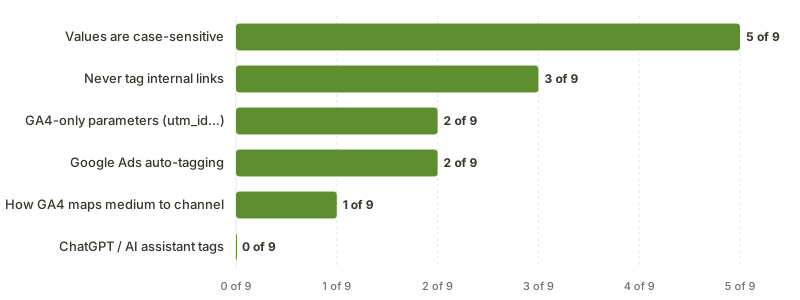
Source: Attrifast review of the Google top 10 for 'what are utm parameters' (US, desktop, DataForSEO SERP, 4 October 2026). Nine pages readable in full; article body only.
Five of the nine cover case sensitivity. Only one explains how GA4 maps a medium to a channel, which is the step that decides where your traffic is reported. None mentions that ChatGPT now tags links by itself, which is the next section.
utm_source=chatgpt.com: the UTM you did not add
If you have seen utm_source=chatgpt.com in your reports, a person clicked a link inside a ChatGPT answer. OpenAI adds the parameter to links in ChatGPT answers so publishers can see that traffic[4], and since June 2025 it has also been on the extra source links under an answer, not only the inline citations[5]. ChatGPT search launched on 31 October 2024[15]. US searches for "utm source chatgpt" went from zero that summer to a peak of 140 a month in the autumn of 2025.
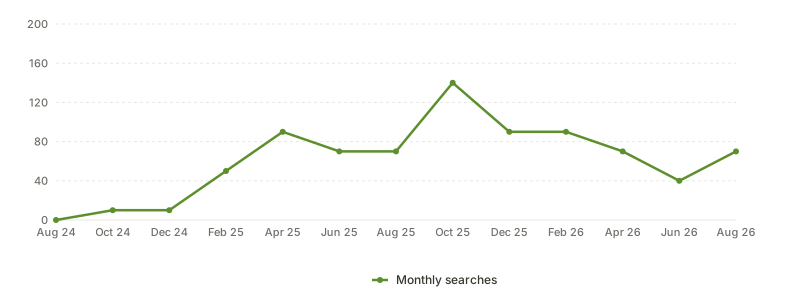
Source: DataForSEO Labs, Google Ads monthly search volume, United States, English, every second month from August 2024 to August 2026. Small volumes are bucketed, so read the shape.
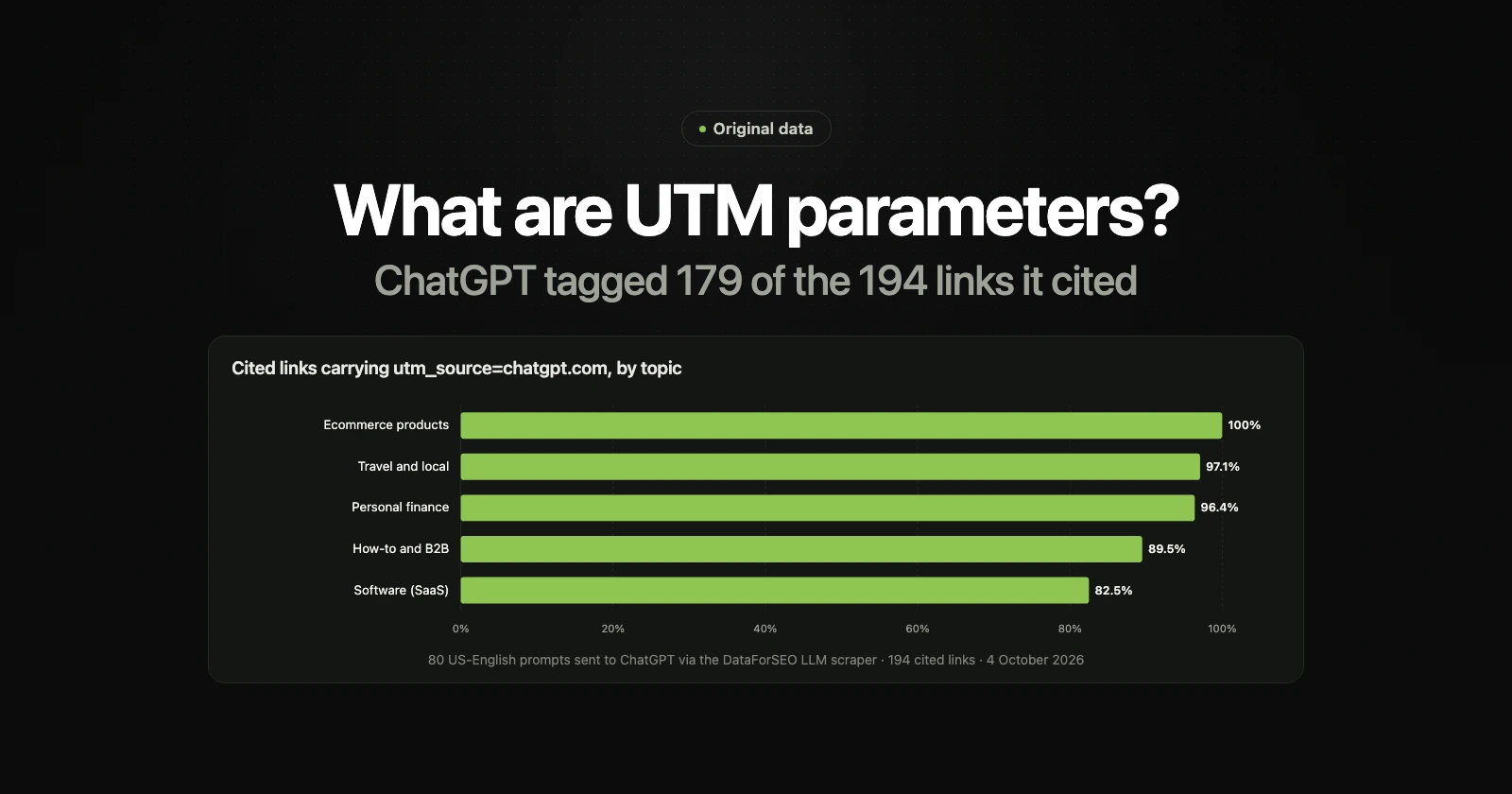
To see how consistent the tagging is, we sent 80 prompts to ChatGPT through DataForSEO's LLM scraper on 4 October 2026[13]. They were the kind of question a buyer asks: best software for a job, best product in a category, personal finance, travel, how-to and health questions. We recorded every link each answer cited.
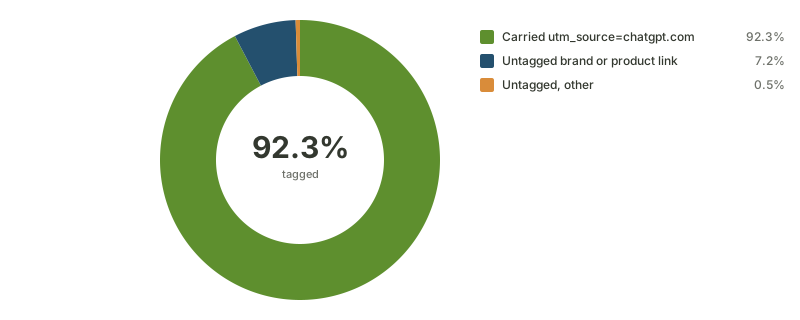
Source: Attrifast study: 80 US-English prompts sent to ChatGPT through the DataForSEO LLM scraper on 4 October 2026. 54 prompts produced cited sources; 194 links across 132 domains: 179 tagged, 14 untagged brand or product links, 1 other.
What we found:
- 179 of 194 cited links (92.3%) carried
utm_source=chatgpt.com. It was always the last parameter, added after whatever the URL already had. - Every link that came from ChatGPT's web search carried it. Each answer also returned the search results ChatGPT read: all 1,183 had the tag, across 457 domains. That matches our September study, where all 894 cited links were tagged.
- The untagged links were brand and product pages. 14 of the 15 were pages ChatGPT linked by name, such as freshbooks.com, klaviyo.com or Meta Ads Manager, and none of the 14 appeared in that answer's search results.
- Other parameters stay on the link. 13.4% of cited links carried parameters besides ChatGPT's tag, such as a language code, Microsoft's
msockid(23 of all links) or LinkedIn'strk(11), with the ChatGPT tag added after them. None of the 1,377 links already carried a UTM of its own, so this test cannot show what ChatGPT does when one is present. - A third of prompts produced no links at all. 26 of 80 answers cited nothing, including 13 of the 15 health and home questions. Those answers send no traffic to tag.
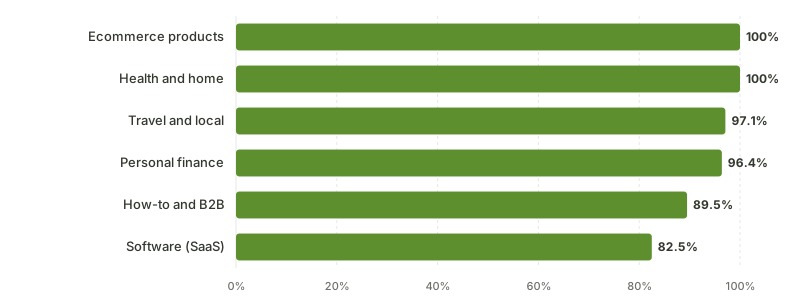
Source: Attrifast ChatGPT study, 4 October 2026. Counts: ecommerce 42/42, health and home 7/7, travel 34/35, finance 27/28, how-to and B2B 17/19, software 52/63.
Software prompts had the lowest tag rate, 52 of 63, because ChatGPT linked more brand pages by name when it recommended tools. If you sell software, more of your ChatGPT clicks can arrive with no tag, and if such a click also comes from a ChatGPT app with no referrer, it lands in Direct. We cover that gap in ChatGPT referral traffic not showing in analytics.
What to do with it
- Keep the parameter. It is the best evidence a visit came from ChatGPT. Make sure no redirect, consent tool or URL cleaner strips it.
- Look for it in Unassigned. GA4's AI Assistant channel is triggered by the referrer, not by the tag[2]. Applying Google's published rules, a click from a ChatGPT app that carries
utm_source=chatgpt.combut no referrer has a source and no medium, matches no channel rule, and is reported as Unassigned. Filter Unassigned by source to find it, or add a custom channel rule for sources containing "chatgpt". - Do not reuse it. Never tag your own campaigns with
utm_source=chatgpt.com, or paid and organic ChatGPT traffic merge.
Do UTM parameters hurt SEO?
Not when they are on links that point to your site from somewhere else. A tagged URL is the same page with a different label. Google's own example of a duplicate URL is a product page with a tracking parameter on the end, and it consolidates such variants, including the links pointing at them, into one canonical URL. A rel="canonical" tag on the page tells it which version you prefer[12].
The risk is internal links. A UTM on your own navigation does not hurt rankings, but it overwrites the original source of every visit that clicks it. That is a reporting problem, not an SEO one.
What UTM parameters cannot tell you
UTMs are the most reliable source label you can add, but they only cover part of the picture:
- Links you did not tag. A link someone pastes into Slack, WhatsApp or a forwarded email arrives with no tag and often no referrer, so it lands in Direct. We break down that bucket in what is direct traffic.
- Clicks from AI answers. You cannot tag a link inside ChatGPT, Perplexity or Claude. ChatGPT adds its own tag, as the study above shows; for the rest you depend on whatever referrer survives.
- Anything before the click. A UTM records the visit that brought someone in. It knows nothing about the ad they saw last week or the podcast they heard first.
- Revenue. A UTM tells you which campaign sent a visit, not whether that visit paid. That needs a join between the session and the payment.
Where UTMs go after the click
A UTM only tells you where a visit came from. Whether that visit paid is a second question, and it depends on what your tools keep:
- Your analytics tool stores the UTMs with the session. In Attrifast, the tracker reads the five classic parameters off the landing URL, stores them on the session, and decides the channel from
utm_mediumfirst, then from the AI engine inutm_sourceor the referrer. - Your checkout may keep them too. Stripe passes Payment Link UTMs through to your post-payment redirect[9], and Shopify's reporting language, ShopifyQL, has UTM fields for both sessions and orders, such as
order_utm_sourceandorder_utm_campaign[11]. - Your CRM only keeps them if your forms pass them through, usually in hidden fields.
When those three disagree, the number to trust is the one joined to a payment. We explain that join in Stripe attribution, and the email version in newsletter revenue attribution.
FAQ
What does UTM stand for?
UTM stands for Urchin Tracking Module. Urchin Software was a web analytics company that Google agreed to buy in March 2005. Its product became Google Analytics, and the parameter names it introduced are still the standard today.
What are the 5 UTM parameters?
utm_source (who sent the click, such as google or newsletter), utm_medium (the type of channel, such as email or cpc), utm_campaign (the campaign name), utm_term (the paid keyword) and utm_content (which link or creative was clicked). GA4 also reads four newer ones: utm_id, utm_source_platform, utm_creative_format and utm_marketing_tactic.
What is the difference between UTM source and UTM medium?
Source is who sent the visitor and medium is how. A newsletter link might use utm_source=newsletter and utm_medium=email; a paid Facebook ad might use utm_source=facebook and utm_medium=paid_social. GA4 decides the channel mostly from the medium, so a wrong medium puts the visit in the wrong channel even when the source is right.
Are UTM parameters case-sensitive?
Yes. Analytics tools store the values exactly as written, so utm_source=Facebook and utm_source=facebook show up as two different sources and split your numbers. Use lowercase for every value.
How many UTM parameters should I use?
At least three on every link you control: utm_source, utm_medium and utm_campaign. Add utm_content when one email or post has several links, and utm_term for paid keywords. Most reporting problems come from a missing medium, not from too few parameters.
Do UTM parameters hurt SEO?
Not if you use them only on links that point to your site from elsewhere. Google treats a URL with a tracking parameter as a duplicate of the clean page and consolidates the two into one canonical URL, and a rel=canonical tag on the page tells it which version to prefer. Never put UTM parameters on your own internal links: they do not hurt rankings, but they overwrite where the visitor really came from.
What does utm_source=chatgpt.com mean?
It means the visitor clicked a link in a ChatGPT answer. ChatGPT adds the parameter to the links it cites so publishers can see the traffic. In our test of 194 links ChatGPT cited on 4 October 2026, 179 carried it, including every link that came from its web search results.
Should I remove utm_source=chatgpt.com from my URLs?
No. It is the most reliable signal you have that a visit came from ChatGPT, because clicks from the ChatGPT apps often arrive without a referrer. Keep it, make sure your redirects do not drop it, and report on it. If ChatGPT is a real channel for you, give it its own group in your reports.
What happens if a link has no utm_medium?
Most tools record the medium as (not set) and fall back to rules that may not fit. In GA4 a visit with a source but no recognised medium can end up in Unassigned or in a channel you did not intend, so always set utm_medium on links you control.
How we got the data
- Search demand: US English keyword volumes, difficulty and monthly history from DataForSEO Labs[14], pulled 4 October 2026. Volumes are Google Ads estimates and are rounded into buckets at low volumes.
- Top-10 review: the Google US desktop top 10 for "what are utm parameters" from the DataForSEO SERP API on 4 October 2026. We searched each page's article body for each topic and read every match in context. One page could not be read without JavaScript and is excluded.
- ChatGPT study: 80 prompts in six categories sent once each through the DataForSEO ChatGPT LLM scraper[13] on 4 October 2026, US location, English. We parsed the query string of every cited link and every search result. The whole study cost $0.32 in API credits.
- Limits: one run per prompt, one country, one day. ChatGPT changes often, so treat the tag rate as a snapshot. The study measures the links in the answer, not what happens after a click.
Continue the research path
- Where does ChatGPT get its information?: our 287-answer source study
- ChatGPT ads attribution: the UTM template that keeps paid ChatGPT apart from organic
- What is direct traffic?: where untagged clicks end up
- What is referral traffic?: the channel UTMs override
- Dark AI traffic in GA4: what the AI Assistant channel still misses
Sources
Primary sources for the claims in this article. Numbered citations in the text link to the matching entry.
- [1][GA4] URL builders: Collect campaign data with custom URLs — Google Analytics Help (2026).
- [2][GA4] Default channel group — Google Analytics Help (2026).
- [3]Google Analytics Adds AI Assistant As Default Channel Group — Search Engine Journal (2026).
- [4]Publishers and Developers - FAQ — OpenAI Help Center (2026).
- [5]OpenAI's ChatGPT Updates To Improve Tracking In Analytics — Search Engine Roundtable (2025).
- [6]UTM parameters — Wikipedia (2026).
- [7]Google Agrees to Acquire Urchin — Google Press Center (2005).
- [8][GA4] Traffic-source dimensions, manual tagging, and auto-tagging — Google Analytics Help (2026).
- [9]Payment Links URL parameters — Stripe Docs (2026).
- [10]Add URL Parameters to Your Meta Ads — Meta Business Help Center (2026).
- [11]ShopifyQL sales schema — Shopify Developers (2026).
- [12]Consolidate duplicate URLs — Google Search Central (2026).
- [13]ChatGPT LLM Scraper: live advanced — DataForSEO API docs (2026).
- [14]DataForSEO Labs: keyword suggestions — DataForSEO API docs (2026).
- [15]OpenAI launches its Google challenger, ChatGPT Search — TechCrunch (2024).